
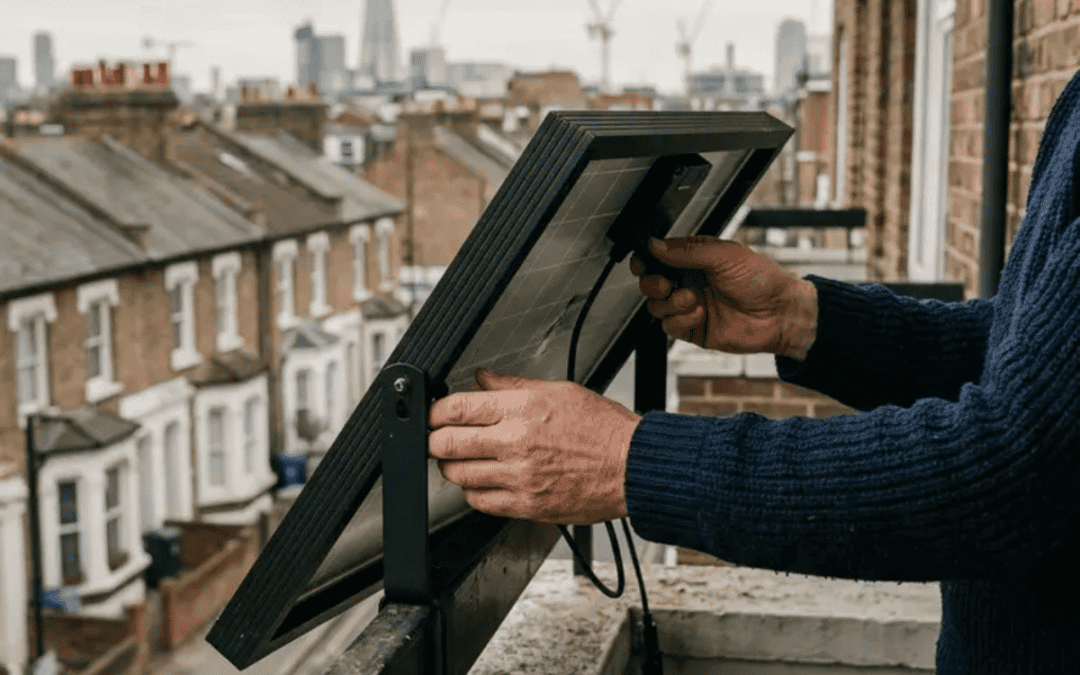
Germany added 1 million plug-in balcony solar systems by mid-2025. The UK installed virtually none.
Over 1 million plug-in balcony solar systems went live by mid-2025. Germany added approximately 435,000 devices in 2024 alone. From January to April 2025, another 135,000 new devices came online, a 36% increase compared to the same period in 2024.
The UK is now watching this explosion and asking: what took us so long?
Energy Secretary Ed Miliband is pushing to simplify regulations around plug-and-play solar systems. These are affordable microinverter-based setups costing between £200 and £750 that let you connect solar panels directly to your home’s electrical system. The technology works. The economics work. But current UK regulations require professional installation, creating barriers that Germany removed years ago.
For UK households right now: the technology exists, but you can’t legally install it yourself yet. Ed Miliband just announced regulatory changes on March 15, 2026, with implementation expected as soon as possible. In the meantime, understanding Germany’s experience reveals what’s coming and who benefits most when barriers fall.
I dug into the consumer testing data, the regulatory contrasts, and the behavioral patterns driving this shift.
What Real-World Testing Shows
Consumer writer Gareth Butterfield tested an EcoFlow Stream system from September 2025 through March 2026. These were predominantly autumn and winter months, with suboptimal solar conditions.
The result? £50 per month in bill reductions, roughly 20-25% off a typical UK household energy bill.
The daily breakdown:
Cloudy winter days generated a few pence in savings. Sunny days hit £1-£2. The system didn’t transform anyone’s energy bill overnight. But Butterfield noted: “even in the depths of winter, I never tire of watching the smart meter in my house drop down to a reading of zero watts” when panels covered the home’s base load.
The psychological hook matters as much as the financial return.
Watching power generation rise and fall throughout the day becomes addictive. Smart meters register zero load as soon as the sun comes out. You’re not just saving money. You’re watching your home pull energy from the sun in real-time.
This behavioral engagement transforms energy conservation from an abstract concept to a tangible daily experience.
Why Germany’s Regulatory Simplification Created an Adoption Explosion
Germany’s plug-in solar market grew from a niche hobby to mainstream adoption after the 2019 regulatory reforms. The changes sound boring. The results aren’t.
They allowed standard electrical plug connections. They simplified registration to 5 basic data fields. In July 2024, federal lawmakers passed renter protections preventing landlords from arbitrarily blocking installations, removing a major adoption barrier.
The UK’s current approach requires professional installation for systems designed for consumer-level simplicity. This adds cost and complexity to technology that’s proven safe across Europe.
Technical concerns can be addressed without creating adoption barriers.
Germany demonstrated this at scale. The UK can learn from that experiment rather than repeat the slow rollout.
The Market Segment Being Ignored
Traditional solar installations target homeowners with suitable roofs, sufficient capital, and long-term property ownership plans.
Plug-and-play systems address everyone else.
Renters can install systems without landlord permission in many configurations. Apartment dwellers with balconies or external walls can generate power. Properties with structural limitations that prevent rooftop installations have options.
Surveys show 60% of UK households are interested in plug-in solar. Bill shocks following the energy crisis drive that interest. The systems cost between £200 and £750, making solar accessible to millions of previously excluded adopters.
This isn’t about converting existing solar customers. This is about creating a new market segment.
UK pilot programs demonstrated that early adopters achieved 25% bill reductions. Payback periods land under 4 years at current tariffs, compared to 7+ years for traditional rooftop solar installations.
The economics work differently when you’re comparing a £500 entry point to a £5,000+ traditional installation.
What Decentralized Solar Does to Grid Infrastructure
The infrastructure analysis doesn’t get enough attention.
Plug-in solar stabilizes networks by shaving peak demand. UK energy infrastructure analysis suggests this could defer £500 million in grid reinforcement capital expenditures.
Distributed generation smooths EV charging loads. It reduces transmission losses, which can account for up to 8% of total electricity generated in centralized systems.
When millions of households become small-scale producers, the grid doesn’t just get cleaner. It gets more resilient.
This challenges traditional utility models. Energy pricing structures built around centralized generation and one-way power flow need to evolve. Grid management becomes more complex but also more flexible.
The shift toward distributed energy networks represents a fundamental change in how we think about power infrastructure.
Germany’s million-plus installations provide real-world data on how grids handle widespread micro-generation. The UK doesn’t need to guess about integration challenges. The testing has already happened.
The Modular Advantage
Traditional solar installations follow an all-or-nothing model. You assess your roof, calculate your needs, and install a complete system.
Plug-and-play systems work differently.
You can start with a single panel. Test performance. Learn how your household consumption patterns match solar generation. Then scale capacity based on actual results rather than theoretical projections.
This incremental approach reduces entry barriers and enables learning-based optimization. You’re not making a £5,000+ bet on projections. You’re making a £500 experiment.
The modular structure addresses changing needs. Household energy consumption shifts over time. EV adoption, new appliances, or work-from-home patterns alter your baseline load. Plug-and-play systems adapt through simple additions rather than complete reinstallation.
What the Installation Industry Disruption Reveals
Removing professional installation requirements democratizes access. It creates tension with the solar installation industry.
This dynamic reveals competing priorities in energy transition.
Professional installers provide quality standards, consumer protection, and expertise. But they add cost that prices out significant market segments. The question: how do you balance accessibility with quality assurance?
Germany’s approach suggests that consumer-level safety can coexist with professional standards for larger installations. The market segments naturally with simple plug-in systems for basic needs and professional installations for high-capacity requirements.
The UK installation industry could shift focus toward premium, high-capacity systems while plug-and-play handles entry-level adoption. That’s not disruption that destroys the industry. That’s market evolution that expands total opportunity.
The Rental Market Power Shift
Plug-and-play solar for renters shifts energy cost control from property owners to occupants. Landlords control utility infrastructure decisions. Tenants accept whatever energy costs result.
Plug-and-play systems flip that dynamic.
Tenants can now reduce energy costs independent of landlord choices. This affects rental valuations and negotiations. Properties with good solar exposure gain value. Tenants gain independence from rising energy costs.
This represents a redistribution of household economic power that extends beyond energy bills.
Landlords will face pressure to accommodate solar installations as tenant expectations evolve. The regulatory framework needs to address installation rights, property modifications, and removal obligations when tenancies end.
Germany’s July 2024 renter protections, preventing landlords from blocking installations, provide a model. The UK will need similar clarity to prevent adoption friction in the rental market.
But who owns the panels when tenants move? What happens if the installation damages property? Current UK rental agreements don’t address these questions. The regulatory framework needs to define installation rights, property modifications, damage liability, and removal obligations at the tenancy end.
What the Timing Window Means for Early Adopters
The technology has matured. Regulatory opening appears imminent. This creates a strategic window for early adopters that won’t last indefinitely.
Current utility pricing models weren’t designed for widespread micro-generation. As adoption increases, utilities will adjust tariff structures to account for distributed generation. Feed-in tariffs, standing charges, and export rates will evolve.
Early adopters lock in economics under current pricing structures. Later adopters face whatever adjustments emerge as the market matures.
Don’t rush into poorly researched decisions. But the timing considerations matter if you’re evaluating plug-in solar. The regulatory and economic landscape will shift as adoption scales.
The Climate Policy Model Hidden in Plain Sight
The plug-and-play approach represents a “small changes, mass adoption” strategy for emissions reduction.
Large-scale infrastructure projects grab headlines. Offshore wind farms, nuclear plants, and grid upgrades require massive capital and long development timelines. They’re necessary but slow.
Plug-in solar distributes transition costs across individual households while aggregating to a meaningful systemic impact. Millions of £500 investments create distributed generation capacity without centralized capital requirements.
This bottom-up model offers lessons for other climate mitigation initiatives.
The behavioral engagement component matters. When people watch their smart meters drop to zero as solar panels cover their base load, energy becomes tangible rather than abstract. That awareness influences consumption decisions beyond solar generation.
Germany’s million-plus installations demonstrate that this model works at scale. The UK can accelerate adoption by learning from that experience rather than repeating the gradual rollout.
What I’m Watching Next
The regulatory changes Miliband is pushing will determine adoption velocity. But I’m watching three specific indicators:
Grid integration protocols. How will distribution network operators handle millions of micro-generators? The technical standards matter as much as the consumer regulations.
Utility tariff evolution. Current pricing structures weren’t designed for widespread distributed generation. The adjustments utilities make will affect long-term economics for all adopters.
Installation quality standards. Consumer-level simplicity needs to coexist with safety assurance. The framework the UK develops will shape market trust and adoption patterns.
Germany’s experience provides a roadmap. The UK doesn’t need to guess about what works. The data exists. The question is whether regulatory changes move fast enough to capture the adoption window before market conditions shift.
I’ve spent months analyzing the consumer testing data, the regulatory contrasts, and the behavioral patterns. The technology works. The economics work. The market demand exists.
The UK will either learn from Germany’s million balcony panels or spend another decade reaching the same conclusion. With Miliband’s March 2026 announcement and the £500 million grid infrastructure savings at stake, regulatory changes appear imminent. The question isn’t whether this happens but whether you’re positioned to benefit when it does.