
Severn Trent consumes 900 GWh of electricity annually to pump, treat, and distribute water across the Midlands. The company already generates 912 GWh from renewable sources, achieving 83% energy self-sufficiency through anaerobic digestion, wind, and hydro assets.
Now it’s adding solar at scale.
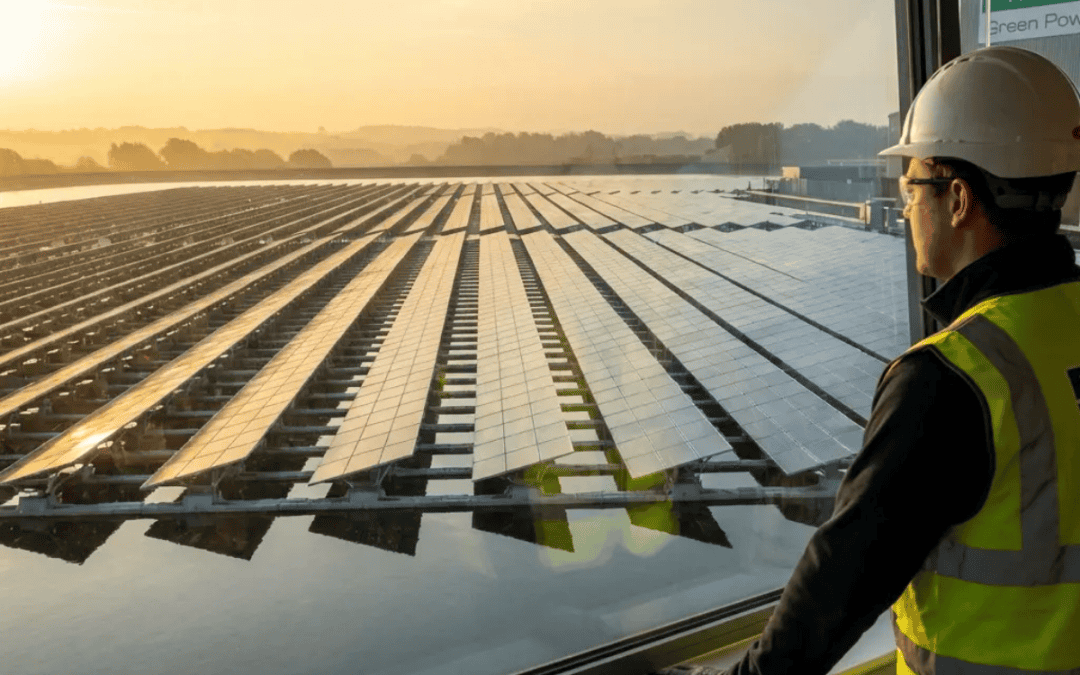
Severn Trent Green Power just committed to four solar projects totaling 210 megawatts-peak across the UK. Construction starts this year, with completion between August 2027 and January 2028. The portfolio will generate 180 GWh annually—a 20% increase to the company’s renewable generation capacity.
The UK solar market hit 50% year-on-year growth for the second consecutive year. The country added 3.5 GW in 2025, bringing total capacity past 23 GW. Forecasts project 5 to 5.5 GWp-dc of new capacity in 2026—the best year on record.
Why Water Companies Are Building Solar Farms
Water treatment is energy-intensive. Pumping, filtration, and distribution consume massive amounts of electricity. For Severn Trent, energy costs represent a significant operational expense and carbon footprint source.
Building renewable generation solves multiple problems.
Revenue diversification. Water utilities operate in highly regulated environments with capped returns. Renewable energy projects offer new income streams outside traditional rate-based revenue models. The electricity generated can be sold to the grid or used internally to offset consumption.
Hedge against energy price volatility. Generating your own power reduces exposure to wholesale electricity market fluctuations. This matters for water utilities with predictable, constant energy demands.
Corporate decarbonization. Water companies face increasing pressure to reduce emissions. Self-generated renewable energy directly addresses Scope 2 emissions from purchased electricity.
The economics have shifted decisively. Energy Secretary Ed Miliband noted that new onshore wind and solar projects are 50% cheaper than building and operating new gas generation. Scottish Water pioneered this approach in the water sector, installing hydro schemes since 2010 and now operating turbines at more than 28 assets. Severn Trent’s solar expansion applies the same strategic logic to a different technology and a larger scale.
The UK Solar Market’s Structural Transformation
Several factors drive this momentum.
Policy support. The UK government’s Clean Power 2030 Action Plan targets 45 to 47 GW of solar capacity by 2030—more than double current levels. This creates regulatory certainty that encourages investment.
Contracts for Difference (CfD) mechanism reduces revenue risk. CfD projects made up 60% of added capacity in recent auctions. The mechanism guarantees a minimum price for generated electricity, making project financing more attractive and predictable.
Technology costs have dropped. Solar module prices, inverter costs, and installation expenses have declined to the point where even UK solar resources generate acceptable returns.
Grid connection availability has improved. Water utilities often own land near existing grid infrastructure, reducing one of the biggest barriers to solar development—securing economically viable connection points.
Severn Trent’s decision to build four separate projects rather than one large facility diversifies geographic exposure, optimizes resource capture across different locations, and enables phased deployment that maintains construction momentum.
Securing planning permissions and grid connections across multiple sites is a significant pre-development achievement that reduces execution risk.
What 210 MW Tells Us About Scale and Ambition
The 210 MW portfolio positions Severn Trent Green Power as a significant independent power producer in the UK renewable landscape.
Four projects totaling 210 MW suggest individual facilities in the 30 to 70 MW range. These aren’t small rooftop installations. They’re utility-scale ground-mounted arrays requiring substantial land, equipment, and capital investment.
The 180 GWh annual generation target indicates expected capacity factors around 10 to 12%, typical for UK solar given weather patterns and latitude.
The construction timeline—August 2027 to January 2028—indicates staggered commissioning. This phased approach allows the company to apply lessons from early projects to later ones, manage contractor resources more efficiently, and smooth out cash flow requirements.
The timing coordinates with supply chain availability. Solar module manufacturers, inverter suppliers, and EPC contractors face growing demand. Securing equipment and construction capacity in advance reduces delays and cost overruns.
The Broader Implications for Energy Markets
Traditional sector boundaries blur. Infrastructure companies that once consumed energy now generate it. This vertical integration creates new competitive dynamics.
Every megawatt of solar capacity displaces fossil fuel generation during daylight hours. As more utilities add renewable capacity, the grid’s carbon intensity decreases.
Increased solar penetration introduces challenges. Solar generates zero-marginal-cost electricity when the sun shines, which depresses wholesale prices during peak production hours. Solar generators earn less per megawatt-hour as more solar capacity comes online.
Water utilities with constant energy needs have a natural advantage here. They can consume self-generated power during the day and draw from the grid at night when prices drop, or add battery storage to capture low-cost solar production for use during peak price periods.
Grid flexibility becomes valuable. The ability to modulate consumption, store energy, or provide grid services creates additional revenue beyond electricity generation.
What This Means for Other Utilities
If you own land, have energy-intensive operations, and operate in a country with a supportive renewable energy policy, building solar makes strategic sense.
The barriers have dropped. Equipment costs are lower. Financing is available. Policy frameworks provide revenue certainty. Planning processes have become more streamlined for renewable projects.
Water utilities have structural advantages. They own substantial land near population centers where electricity demand is high. They have existing grid connections and relationships with distribution network operators. They understand large infrastructure project development.
The question is how quickly other utilities will move and how large they’ll scale.
The UK market is growing 50% year-on-year. That growth creates opportunities for infrastructure companies to capture value, reduce costs, and contribute to decarbonization.
Utilities that move now secure the best sites, build internal expertise, and establish relationships with equipment suppliers and contractors before competition intensifies.
The Path Forward
Severn Trent has systematically transformed its energy profile over the past decade—ramping renewable generation from a fraction of consumption to 83% energy self-sufficiency today. The 210 MW solar commitment isn’t an experiment—it’s the next logical step in that evolution.
The UK needs to add roughly 25 GW of solar capacity by 2030 to meet government targets of 45-47 GW, averaging 5 GW annually from current levels. Water utilities control a significant share of the land, grid access, and capital required to make this happen.
The question isn’t whether more water utilities will follow Severn Trent into large-scale solar. It’s how fast they’ll move and whether they’ll act before the best sites, grid connections, and contractor capacity get locked up.
Construction starts this year. The first projects come online in 2027.
And every water utility with energy-intensive operations is paying attention.