
Buildings consume 30% of global energy. Homeowners spend thousands on the wrong fixes. And $130 billion in energy savings sits on the table every year because people don’t know where to start.
I talked to five energy experts who work on this problem daily. They showed me why most efficiency advice misses the mark and what actually works.
The Cheapest Energy Is the Energy You Never Use
The International Energy Agency calls energy efficiency “the first fuel.”
Every unit of energy you don’t consume costs nothing. No generation. No transmission. No billing.
Accelerating energy efficiency improvements can deliver over 70% of the projected decline in oil demand and 50% of the reduction in gas demand by 2030. The reduction in natural gas demand would exceed Europe’s total natural gas use in 2024.
That’s not optimization. That’s rethinking energy as a resource.
Where Your Heat Actually Goes
Most people guess wrong about heat loss. They think windows are the problem.
The data tells a different story.
In an uninsulated timber-framed house:
- 30 to 35% of heat escapes through the roof
- 21 to 31% through windows
- 18 to 25% through walls
In pre-1980 homes with minimal insulation, 35% of heat escapes through walls, 25% through the roof, and 15% through windows.
This matters because people spend thousands replacing windows when they should be insulating their attic first.
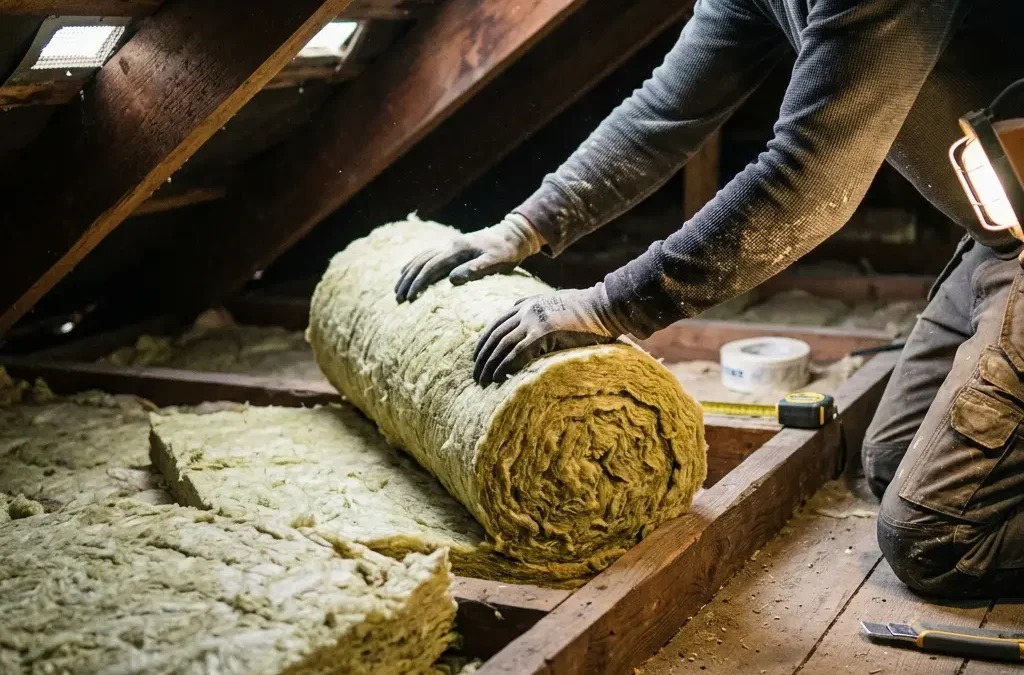
Loft insulation to 27-30 centimeters of mineral wool works continuously. No moving parts. No ongoing energy input. Just reduced heating demand.
The thermal barrier works while you sleep, work, or vacation.
The Wall Problem
Cavity wall insulation delivers similar returns, but people underestimate the impact.
One expert insulated their cavity walls and saved $180 per year. Real money returning year after year with zero maintenance.
The investment pays for itself, then keeps paying.
Heat Pumps Change the Math Entirely
Heat pumps deliver 2 to 4 units of heat for every unit of electrical power consumed. This changes the cost equation, even though electricity costs more per unit than gas.
The numbers: replacing fossil fuel boilers with high-efficiency heat pumps can reduce energy use by up to 75%.
When you combine heat pumps with 50% renewable electricity generation, you reduce heating emissions by 70% compared to gas boilers.
Investing in envelope upgrades like insulation and air sealing means the cost of purchasing and installing a heat pump can be up to $3,700 lower. A well-insulated home needs a smaller heat pump.
Insulation first, then equipment. The sequence matters.
Real-World Heat Pump Savings
National laboratory research shows that for over 90% of American households assessed, replacing worn-out heating equipment with the right heat pump will save on energy bills.
Nationally, heat pumps would cut home site energy use by 31% to 47% on average, depending on efficiency level. When combined with building upgrades like better insulation, savings reach 41% to 52%.
For the 49 million homes using electricity, fuel oil, or propane for heat and have air conditioning, 92% to 100% would see energy bill savings. Median savings: $300 to $650 per year.
The Behavioral Economics Problem
Technical solutions only work if people use them.
“Present bias” causes consumers to excessively discount future costs. You focus on immediate expenses rather than anticipated price increases.
Research shows present biased individuals consume 9 to 10% more power than time-consistent counterparts.
People research energy efficiency improvements, obtain quotes, and then never execute. The barrier isn’t information. It’s decision complexity.
The $130 Billion Gap
Americans leave an estimated $130 billion on the table every year in energy-saving opportunities.
The gap exists because people focus on upfront costs while undervaluing long-term savings and co-benefits like comfort or health improvements.
Administrative burden compounds this. Even small procedural hurdles trigger procrastination, drastically reducing uptake of energy-efficient investments.
The Indirect Savings Nobody Counts
Energy bill reduction is the beginning.
One expert eliminated their fireplace. The savings extended beyond heat loss:
- No cleaning time
- No ash disposal labor
- No fuel transportation costs
- Reduced exposure to particulate air pollution
These cascading benefits don’t appear in simple energy bill comparisons.
The same pattern shows up with heat pumps. Eliminating the $165 gas standing charge. No boiler maintenance. No carbon monoxide risk.
System integration amplifies results. Insulation plus heat pump plus behavioral changes creates compound effects.
The Investment Reality
Energy efficiency investment has risen by nearly 50% since 2019. Investment in buildings increased by about 14% to over $250 billion in 2022.
But investments need to triple from $660 billion today to $1.9 trillion in 2030.
The renovation rate of global building stock sits at 1% per year. The requirement: 2.5% per year by 2030.
The financial burden falls on homeowners. High inflation has increased costs, making it harder for households to afford or secure finance for renovations.
And renters can’t implement these measures at all. This creates a structural inequality in energy security. As efficiency improvements become economically essential, the gap between homeowners and renters widens.
A Real Example: How One Homeowner Cut Energy Use 52%
A homeowner in Ohio followed this exact sequence. First: attic insulation to 30 centimeters, then cavity wall insulation. Total cost: $4,200. Annual savings: $680.
Next: replaced the gas furnace with a heat pump. Because the home was well insulated, they installed a smaller unit, saving $3,200 on equipment costs. Combined annual savings: $950, including eliminated gas standing charges.
Total investment: $8,500. Payback period: 9 years. Then the savings continue for the 20+ year life of the equipment.
What Actually Works
The evidence points to a clear sequence:
1. Address thermal barriers first
Insulate your attic to 27 to 30 centimeters. Then tackle cavity walls. These systems deliver continuous returns with zero maintenance.
2. Upgrade to heat pump systems strategically
Do the insulation work first. This lets you install a smaller, less expensive heat pump.
3. Eliminate standing charges where possible
Full electrification removes gas standing charges and maintenance costs. The economy improves as renewable electricity generation increases.
4. Reduce decision friction
The barrier isn’t information. Its implementation complexity. Find contractors you trust, then execute before decision paralysis sets in.
5. Think in systems, not components
Insulation plus heat pump plus behavioral changes creates compound effects.
Start with thermal barriers. Move to efficient systems. Execute before the next price shock hits.